
• Skip to primary navigation
  • Skip to main content
  • Skip to primary sidebar
CMR ASSOCIATES CPA - TAX ACCOUNTING | SPEED ACCURACY | SOLUTIONS

CMR Associates - Tax | Staffing | 401k Audits

Accuracy | Solutions | Speed

  • Services
    • Tax Accounting
    • Business Accounting and Fractional CFO
    • Business System Implementation
    • 401(k) Audit Services
    • Remote CPA Staffing
    • Business Valuation
  • Industries
    • Construction & Job Costing Industries
    • Real Estate Accounting
    • Restaurants and Hospitality Accounting
    • Doctors
    • Retail
    • Musicians
  • Pricing Tool
  • About Us
  • New Clients
    • Onboarding
  • Resources
    • Client Portal
    • IRS Authorization
  • Contact Us
  • Show Search
Hide Search
You are here: Home / News

News

The tax implications if your business engages in environmental cleanup

Louisiana CPA- The tax implications if your business engages in environmental cleanup

The tax implications if your business engages in environmental cleanup

If your company faces the need to “remediate” or clean up environmental contamination, the money you spend can be deductible on your tax return as ordinary and necessary business expenses. Of course, you want to claim the maximum immediate income tax benefits possible for the expenses you incur.

These expenses may include the actual cleanup costs, as well as expenses for environmental studies, surveys and investigations, fees for consulting and environmental engineering, legal and professional fees, environmental “audit” and monitoring costs, and other expenses.

Current deductions vs. capitalized costs

Unfortunately, every type of environmental cleanup expense cannot be currently deducted. Some cleanup costs must be capitalized. But, generally, cleanup costs are currently deductible to the extent they cover:

  • “Incidental repairs” (for example, encapsulating exposed asbestos insulation); or
  • Cleaning up contamination that your business caused on your own property (for example, removing soil contaminated by dumping wastes from your own manufacturing processes, and replacing it with clean soil) — if you acquired that property in an uncontaminated state.

On the other hand, remediation costs generally have to be capitalized if the remediation:

  • Adds significantly to the value of the cleaned-up property,
  • Prolongs the useful life of the property,
  • Adapts the property to a new or different use,
  • Makes up for depreciation, amortization or depletion that’s been claimed for tax purposes, or
  • Creates a separate capital asset that’s useful beyond the current tax year.

However, parts of these types of remediation costs may qualify for a current deduction. It depends on the facts and circumstances of your situation. For example, in one case, the IRS required a taxpayer to capitalize the costs of surveying for contamination various sites that proved to be contaminated, but allowed a current deduction for the costs of surveying the sites that proved to be uncontaminated.

Maximize the tax breaks

In addition to federal tax deductions, there may be state or local tax incentives involved in cleaning up contaminated property. The tax treatment for the expenses can be complex. If you have environmental cleanup expenses, we can help plan your efforts to maximize the deductions available.

What is your taxpayer filing status?

Louisiana CPA- What is your taxpayer filing status

What is your taxpayer filing status?

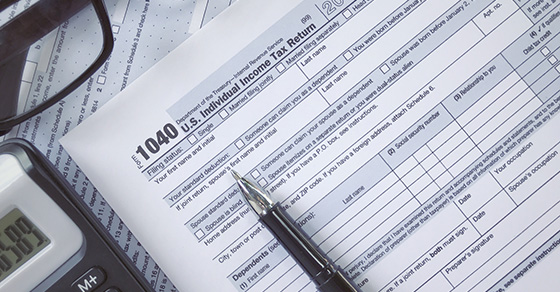
For tax purposes, December 31 means more than New Year’s Eve celebrations. It affects the filing status box that will be checked on your tax return for the year. When you file your return, you do so with one of five filing statuses, which depend in part on whether you’re married or unmarried on December 31.

More than one filing status may apply, and you can use the one that saves the most tax. It’s also possible that your status options could change during the year.

Here are the filing statuses and who can claim them:

  1. Single. This status is generally used if you’re unmarried, divorced or legally separated under a divorce or separate maintenance decree governed by state law.
  2. Married filing jointly. If you’re married, you can file a joint tax return with your spouse. If your spouse passes away, you can generally file a joint return for that year.
  3. Married filing separately. As an alternative to filing jointly, married couples can choose to file separate tax returns. In some cases, this may result in less tax owed.
  4. Head of household. Certain unmarried taxpayers may qualify to use this status and potentially pay less tax. The special rules that apply are described below.
  5. Qualifying widow(er) with a dependent child. This may be used if your spouse died during one of the previous two years and you have a dependent child. Other conditions also apply.

Head of household status

Head of household status is generally more favorable than filing as a single taxpayer. To qualify, you must “maintain a household” that, for more than half the year, is the principal home of a “qualifying child” or other relative that you can claim as your dependent.

A “qualifying child” is defined as someone who:

  • Lives in your home for more than half the year,
  • Is your child, stepchild, foster child, sibling, stepsibling or a descendant of any of these,
  • Is under 19 years old or a student under age 24, and
  • Doesn’t provide over half of his or her own support for the year.

Different rules may apply if a child’s parents are divorced. Also, a child isn’t a “qualifying child” if he or she is married and files jointly or isn’t a U.S. citizen or resident.

Maintaining a household

For head of household filing status, you’re considered to maintain a household if you live in it for the tax year and pay more than half the cost of running it. This includes property taxes, mortgage interest, rent, utilities, property insurance, repairs, upkeep, and food consumed in the home. Don’t include medical care, clothing, education, life insurance or transportation.

Under a special rule, you can qualify as head of household if you maintain a home for a parent of yours even if you don’t live with the parent. To qualify, you must be able to claim the parent as your dependent.

Marital status

You must generally be unmarried to claim head of household status. If you’re married, you must generally file as either married filing jointly or married filing separately, not as head of household. However, if you’ve lived apart from your spouse for the last six months of the year and a qualifying child lives with you and you “maintain” the household, you’re treated as unmarried. In this case, you may be able to qualify as head of household.

If you have questions about your filing status, contact us.

2 valuable year-end tax-saving tools for your business

Louisiana CPA- 2 valuable year-end tax-saving tools for your business

2 valuable year-end tax-saving tools for your business

At this time of year, many business owners ask if there’s anything they can do to save tax for the year. Under current tax law, there are two valuable depreciation-related tax breaks that may help your business reduce its 2019 tax liability. To benefit from these deductions, you must buy eligible machinery, equipment, furniture or other assets and place them into service by the end of the tax year. In other words, you can claim a full deduction for 2019 even if you acquire assets and place them in service during the last days of the year.

The Section 179 deduction

Under Section 179, you can deduct (or expense) up to 100% of the cost of qualifying assets in Year 1 instead of depreciating the cost over a number of years. For tax years beginning in 2019, the expensing limit is $1,020,000. The deduction begins to phase out on a dollar-for-dollar basis for 2019 when total asset acquisitions for the year exceed $2,550,000.

Sec. 179 expensing is generally available for most depreciable property (other than buildings) and off-the-shelf computer software. It’s also available for:

  • Qualified improvement property (generally, any interior improvement to a building’s interior, but not for the internal structural framework, for enlarging a building, or for elevators or escalators),
  • Roofs, and
  • HVAC, fire protection, alarm, and security systems.

The Sec. 179 deduction amount and the ceiling limit are significantly higher than they were a few years ago. In 2017, for example, the deduction limit was $510,000, and it began to phase out when total asset acquisitions for the tax year exceeded $2.03 million.

The generous dollar ceiling that applies this year means that many small and medium sized businesses that make purchases will be able to currently deduct most, if not all, of their outlays for machinery, equipment and other assets. What’s more, the fact that the deduction isn’t prorated for the time that the asset is in service during the year makes it a valuable tool for year-end tax planning.

Bonus depreciation

Businesses can claim a 100% bonus first year depreciation deduction for machinery and equipment bought new or used (with some exceptions) if purchased and placed in service this year. The 100% deduction is also permitted without any proration based on the length of time that an asset is in service during the tax year.

Business vehicles

It’s important to note that Sec. 179 expensing and bonus depreciation may also be used for business vehicles. So buying one or more vehicles before December 31 may reduce your 2019 tax liability. But, depending on the type of vehicle, additional limits may apply.

Businesses should consider buying assets now that qualify for the liberalized depreciation deductions. Please contact us if you have questions about depreciation or other tax breaks.

Medical expenses: What it takes to qualify for a tax deduction

Louisiana CPA- Medical expenses. What it takes to qualify for a tax deduction

Medical expenses: What it takes to qualify for a tax deduction

As we all know, medical services and prescription drugs are expensive. You may be able to deduct some of your expenses on your tax return but the rules make it difficult for many people to qualify. However, with proper planning, you may be able to time discretionary medical expenses to your advantage for tax purposes.

The basic rules

For 2019, the medical expense deduction can only be claimed to the extent your unreimbursed costs exceed 10% of your adjusted gross income (AGI). You also must itemize deductions on your return.

If your total itemized deductions for 2019 will exceed your standard deduction, moving or “bunching” nonurgent medical procedures and other controllable expenses into 2019 may allow you to exceed the 10% floor and benefit from the medical expense deduction. Controllable expenses include refilling prescription drugs, buying eyeglasses and contact lenses, going to the dentist and getting elective surgery.

In addition to hospital and doctor expenses, here are some items to take into account when determining your allowable costs:

1. Health insurance premiums. This item can total thousands of dollars a year. Even if your employer provides health coverage, you can deduct the portion of the premiums that you pay. Long-term care insurance premiums are also included as medical expenses, subject to limits based on age.

2. Transportation. The cost of getting to and from medical treatments counts as a medical expense. This includes taxi fares, public transportation, or using your own car. Car costs can be calculated at 20¢ a mile for miles driven in 2019, plus tolls and parking. Alternatively, you can deduct certain actual costs, such as for gas and oil.

3. Eyeglasses, hearing aids, dental work, prescription drugs and professional fees. Deductible expenses include the cost of glasses, hearing aids, dental work, psychiatric counseling and other ongoing expenses in connection with medical needs. Purely cosmetic expenses don’t qualify. Prescription drugs (including insulin) qualify, but over-the-counter aspirin and vitamins don’t. Neither do amounts paid for treatments that are illegal under federal law (such as marijuana), even if state law permits them. The services of therapists and nurses can qualify as long as they relate to a medical condition and aren’t for general health. Amounts paid for certain long-term care services required by a chronically ill individual also qualify.

4. Smoking-cessation and weight-loss programs. Amounts paid for participating in smoking-cessation programs and for prescribed drugs designed to alleviate nicotine withdrawal are deductible. However, nonprescription nicotine gum and patches aren’t. A weight-loss program is deductible if undertaken as treatment for a disease diagnosed by a physician. Deductible expenses include fees paid to join a program and attend periodic meetings. However, the cost of food isn’t deductible.

Dependent expenses

You can deduct the medical costs that you pay for dependents, such as your children. Additionally, you may be able to deduct medical costs you pay for other individuals, such as an elderly parent. If you have questions about medical expense deductions, contact us.

Holiday parties and gifts can help show your appreciation and provide tax breaks

Louisiana CPA- Holiday parties and gifts can help show your appreciation and provide tax breaks

Holiday parties and gifts can help show your appreciation and provide tax breaks

With Thanksgiving behind us, the holiday season is in full swing. At this time of year, your business may want to show its gratitude to employees and customers by giving them gifts or hosting holiday parties. It’s a good idea to understand the tax rules associated with these expenses. Are they tax deductible by your business and is the value taxable to the recipients?

Customer and client gifts

If you make gifts to customers and clients, the gifts are deductible up to $25 per recipient per year. For purposes of the $25 limit, you don’t need to include “incidental” costs that don’t substantially add to the gift’s value, such as engraving, gift wrapping, packaging or shipping. Also excluded from the $25 limit is branded marketing collateral — such as small items imprinted with your company’s name and logo — provided they’re widely distributed and cost less than $4.

The $25 limit is for gifts to individuals. There’s no set limit on gifts to a company (for example, a gift basket for all team members of a customer to share) as long as they’re “reasonable.”

Employee gifts

In general, anything of value that you transfer to an employee is included in his or her taxable income (and, therefore, subject to income and payroll taxes) and deductible by your business. But there’s an exception for noncash gifts that constitute a “de minimis” fringe benefit.

These are items small in value and given infrequently that are administratively impracticable to account for. Common examples include holiday turkeys or hams, gift baskets, occasional sports or theater tickets (but not season tickets), and other low-cost merchandise.

De minimis fringe benefits aren’t included in your employee’s taxable income yet they’re still deductible by your business. Unlike gifts to customers, there’s no specific dollar threshold for de minimis gifts. However, many businesses use an informal cutoff of $75.

Important: Cash gifts — as well as cash equivalents, such as gift cards — are included in an employee’s income and subject to payroll tax withholding regardless of how small and infrequent.

Throwing a holiday party

Under the Tax Cuts and Jobs Act, certain deductions for business-related meals were reduced and the deduction for business entertainment was eliminated. However, there’s an exception for certain recreational activities, including holiday parties.

Holiday parties are fully deductible (and excludible from recipients’ income) so long as they’re primarily for the benefit of non-highly-compensated employees and their families. If customers, and others also attend, holiday parties may be partially deductible.

Spread good cheer

Contact us if you have questions about giving holiday gifts to employees or customers or throwing a holiday party. We can explain the tax rules.

3 last-minute tips that may help trim your tax bill

Louisiana CPA- 3 last-minute tips that may help trim your tax bill

3 last-minute tips that may help trim your tax bill

If you’re starting to fret about your 2019 tax bill, there’s good news — you may still have time to reduce your liability. Three strategies are available that may help you cut your taxes before year-end, including:

1. Accelerate deductions/defer income. Certain tax deductions are claimed for the year of payment, such as the mortgage interest deduction. So, if you make your January 2020 payment this month, you can deduct the interest portion on your 2019 tax return (assuming you itemize).

Pushing income into the new year also will reduce your taxable income. If you’re expecting a bonus at work, for example, and you don’t want the income this year, ask if your employer can hold off on paying it until January. If you’re self-employed, you can delay your invoices until late in December to divert the revenue to 2020.

You shouldn’t pursue this approach if you expect to land in a higher tax bracket next year. Also, if you’re eligible for the qualified business income deduction for pass-through entities, you might reduce the amount of that deduction if you reduce your income.

2. Maximize your retirement contributions. What could be better than paying yourself instead of Uncle Sam? Federal tax law encourages individual taxpayers to make the maximum allowable contributions for the year to their retirement accounts, including traditional IRAs and SEP plans, 401(k)s and deferred annuities.

For 2019, you generally can contribute as much as $19,000 to 401(k)s and $6,000 for traditional IRAs. Self-employed individuals can contribute up to 25% of your net income (but no more than $56,000) to a SEP IRA.

3. Harvest your investment losses. Losing money on your investments has a bit of an upside — it gives you the opportunity to offset taxable gains. If you sell underperforming investments before the end of the year, you can offset gains realized this year on a dollar-for-dollar basis.

If you have more losses than gains, you generally can apply up to $3,000 of the excess to reduce your ordinary income. Any remaining losses are carried forward to future tax years.

We can help

The strategies described above are only a sampling of strategies that may be available. Contact us if you have questions about these or other methods for minimizing your tax liability for 2019.

  • « Go to Previous Page
  • Page 1
  • Interim pages omitted …
  • Page 3
  • Page 4
  • Page 5
  • Page 6
  • Page 7
  • Interim pages omitted …
  • Page 41
  • Go to Next Page »

Primary Sidebar

Tax. Accounting. Solutions.

Need a good accountant? We can help. Serving clients globally, we embrace distributed work environments. Book a call to learn more.

Book an appointment with Personnel Calendar using SetMore

About CMR Associates

Covington CPA and Tax Accountants Team

Tax Accounting and Business Consulting: We provide tax accounting, business accounting, Outsourced CFO, back-office CPA staffing, business system implementation, payroll, business valuation, consulting, and strategic planning services. …

Publication by CMR Associates

Charles Renwick CPA

All of the latest publications from the directors and staff at CMR …

TAX NEWS AND ADVICE

  • Business Tax Advice
  • Individual Tax Advice
  • Outsourced Accounting
  • Personal Finance
  • Remote Work

Terms and Conditions
Outsourced Accountant CPA
All the Presidents’ Taxes
401k Audit Services CPA

Get solutions today with CMR Assocaites. Learn More

CMR Associates - Tax |  Staffing | 401k Audits

© 2026 · Sitemap

  • Services
  • Industries
  • Pricing Tool
  • About Us
  • New Clients
  • Resources
  • Contact Us